Complete Perth Wedding Runsheet
Coordinating Your Perfect Perth Wedding Day with Live Entertainment. Walk through guide and downloadable spreadsheet template with budget tracker.
A guided example of how you may like to structure your day, questions you should ask, and what to think about to help give you a head start!
Planning a wedding involves coordinating dozens of moving parts, from ceremony timing to vendor arrivals, guest flow, and entertainment transitions. A well-structured wedding runsheet is essential for ensuring your special day runs smoothly, particularly when coordinating live entertainment throughout the event.
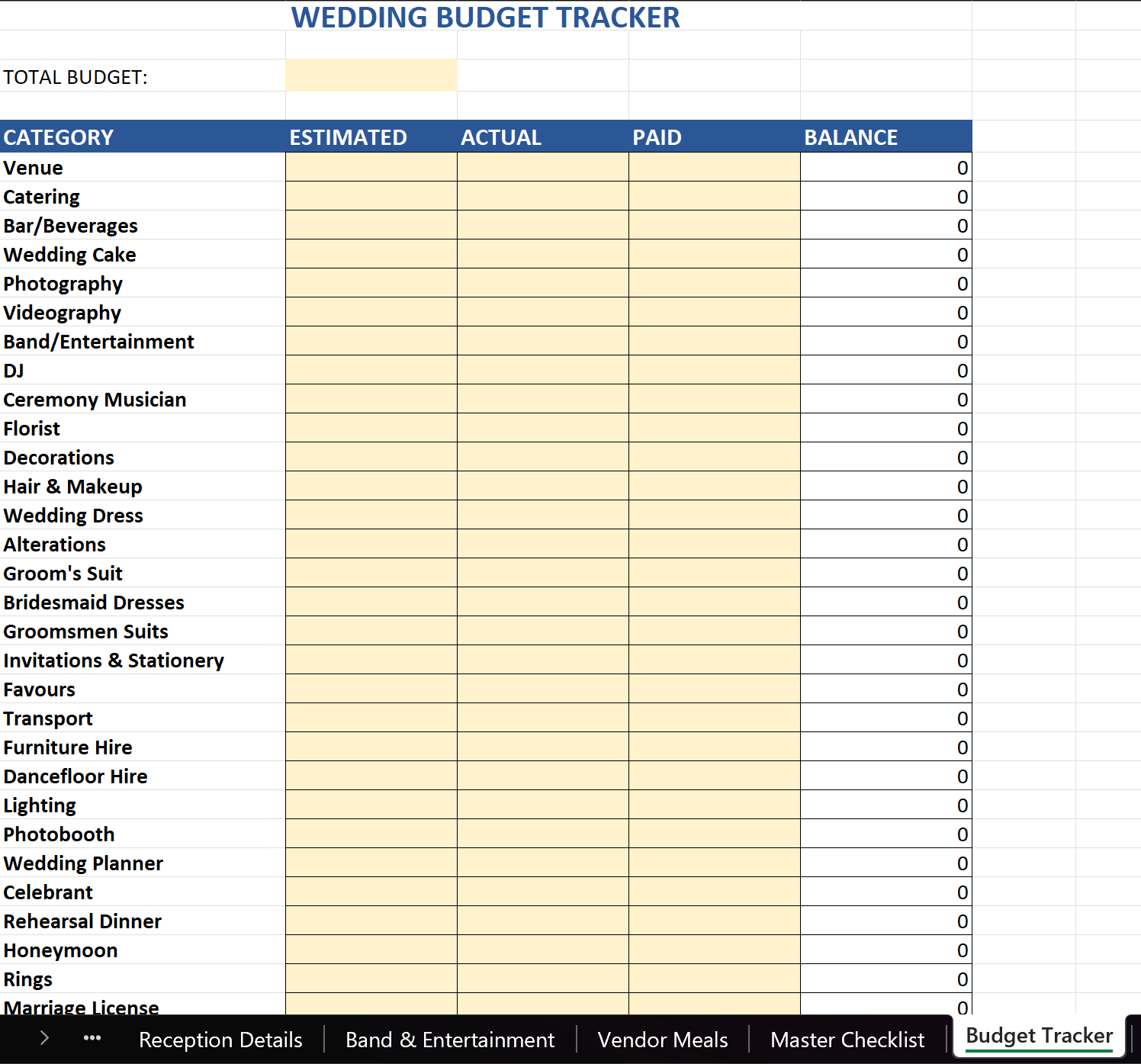
Helpful spreadsheet is linked below.
This comprehensive guide walks you through every phase of a typical wedding day, with special attention to band requirements, setup considerations, and performance timing. Planning an intimate garden ceremony or a grand venue celebration, requires the same flow to ensure your day goes smoothly, and what your entertainment needs will help ensure seamless coordination between all vendors and create an unforgettable experience for you and your guests.
Contents
Pre-Ceremony Setup & Preparations
The Ceremony
Post-Ceremony Photos & Cocktail Hour
Reception Entrance & Speeches
Dinner Service & Live Entertainment
The First Dance & Evening Celebrations
Band Requirements & Logistics
Flexibility & Customisation Options
Final Considerations & Bump Out
Downloadable Spreadsheet Template
1. Pre-Ceremony Setup & Preparations
The day typically begins with vendor arrivals and setup, often starting as early as 7:00 AM for structural elements like marquees and lighting installations. The morning hours are crucial for establishing the foundation of your event.
Venue Preparation Timeline
Between 7:00 AM and 10:00 AM, various vendors will arrive for setup. This includes:
Marquee and structural installations
Lighting and festoon installations
Furniture hire companies
Dancefloor installation (typically 12:00 PM–2:00 PM)
Ceremony seating arrangements
Bridal Party Preparations
While the venue is being transformed, the bridal party typically begins their preparations at an off-site location. Hair and makeup artists usually arrive around 8:00 AM–10:30 AM, with the process taking several hours. The groom and groomsmen often have a more relaxed morning schedule, getting ready at a separate location before departing for pre-ceremony photos around midday.
Floral and Styling Setup
Florists typically arrive between 11:00 AM and 1:00 PM to deliver personal flowers to the bridal party and begin venue installations. Reception styling follows, with careful placement of centrepieces, table settings, and decorative elements. This is also when items like gift tables, cake displays, and seating charts are positioned.
2. The Ceremony
The ceremony is the centrepiece of your wedding day, typically scheduled between 4:00 PM and 5:00 PM to take advantage of beautiful afternoon light.
Pre-Ceremony Music Setup
BAND REQUIREMENT: If using live ceremony music, the musician(s) should arrive for setup and soundcheck by 2:30 PM–3:00 PM, with all setup complete by 3:30 PM before guests begin arriving.
For ceremonies, options can include:
Solo musician (pianist, guitarist, saxophonist, or vocalist)
Acoustic duo for a fuller sound
Pre-recorded music played through the celebrant's PA system
Ceremony Flow (4:00 PM–5:00 PM)
Guests typically begin arriving around 4:00 PM, with pre-ceremony music creating atmosphere as they take their seats. The ceremony itself usually begins at 4:30 PM and includes:
Processional music: Live or recorded music as the bridal party walks down the aisle, with the bride's entrance often accompanied by a specific meaningful song
Signing music: Optional music during the signing of official documents (may occur during or after ceremony)
Recessional music: Upbeat, celebratory music as the newly married couple exits
Important Note: Many couples request an 'unplugged ceremony' where guests refrain from using phones and cameras, allowing the professional photographer to capture the moments without interference.
3. Post-Ceremony Photos & Cocktail Hour
The period immediately following the ceremony is crucial for capturing memories whilst keeping guests entertained.
Photo Session (5:00 PM–6:00 PM)
After the ceremony concludes around 5:00 PM, couples often take a private moment to view the reception space before it's filled with guests. This 'first look' of the reception is an intimate, memorable moment. Family photos typically follow, focusing on immediate family and the bridal party, taking advantage of the ceremony location and venue grounds.
Cocktail Hour Entertainment
BAND LOCATION: During this 45-60 minute period (5:15 PM–6:00 PM), live entertainment moves to the cocktail area, typically positioned on or near the dancefloor facing the lawn or cocktail space.
This is the perfect time for:
Solo musician or duo performing ambient background music
Acoustic sets featuring jazz standards, soft pop covers, or instrumental pieces
A relaxed atmosphere that allows conversation whilst providing ambience
Guests enjoy welcome drinks (cocktails, sparkling wine) and canapés during this time. Some venues offer unique touches like gelato stations, oyster bars, or speciality sorbet service with sparkling wine.
4. Reception Entrance & Speeches
As the sun begins to set (typically around 6:15 PM in warmer months), guests transition from the cocktail area to the reception venue for dinner.
Reception Commencement (6:00 PM–6:30 PM)
BAND REQUIREMENT: During initial seating and the couple's short break, background music is typically played through the band's speakers. This can be a curated Spotify playlist provided by the couple or MC.
The MC (often a family member or professional) performs welcome announcements and housekeeping around 6:15 PM, covering:
Welcome and acknowledgement of guests
Schedule overview for the evening
Any venue-specific information
Bridal Party Entrance
CUSTOM SONG: The couple's entrance around 6:25 PM typically features a special song choice. Some couples provide a custom-edited music file for this moment. The MC introduces the couple by their married name and plays the entrance music.
Note: The bridal party often enters separately and is already seated with guests, with only the newly married couple making the formal entrance.
Speech Schedule
Speeches are strategically placed between courses to maintain guest engagement and meal pacing:
Speech Block 1 (6:30 PM): Father of the bride before entrée service
Speech Block 2 (7:20 PM): Best man and maid of honour after entrée, before main course
Speech Block 3 (8:30 PM): Groom's speech after main course, before dessert
5. Dinner Service & Live Entertainment
The dinner service represents a significant portion of the reception, typically running from 6:30 PM through to 9:00 PM.
Band Performance During Dinner
BAND PERFORMANCE: Live entertainment during dinner typically features a duo format (7:00 PM–9:00 PM), providing sophisticated background music that enhances the dining atmosphere without overwhelming conversation.
BREAK MUSIC: During band breaks, background music continues via Spotify playlists controlled by the band or MC. Couples should prepare playlists titled something like 'Reception Band Breaks' or 'Reception Dinner' for seamless transitions.
Additional Evening Elements
Other entertainment and services available during dinner include:
Photobooth opening (typically 7:00 PM)
Roaming photographers and videographers
Venue staff coordinating meal service
6. The First Dance & Evening Celebrations
As dinner concludes and dessert is served around 8:45 PM–9:00 PM, the energy shifts toward celebration and dancing.
Band Transition to Full Ensemble
BAND CONFIGURATION: At 9:00 PM, the band transitions from duo to full ensemble (typically 4-piece: vocals, guitar, bass, drums) for the evening's main entertainment set running until midnight.
The First Dance
CRITICAL DECISION: Couples must decide whether they want the first dance performed live by the band or played from a recorded version (MP3/Spotify).
Live first dances offer unique benefits:
• Personalised arrangement (e.g., starting acoustic before building to full tempo)
• Flexible pacing adjusted to the couple's comfort level
• Memorable, one-of-a-kind performance
• Seamless transition to open dancefloor
Following the first dance at 9:05 PM, the dancefloor opens to all guests, marking the beginning of the evening's celebration.
Evening Timeline
The final hours of the reception follow this typical flow:
• 9:15 PM: Wedding planner typically departs after key moments complete
• 10:00 PM: Photobooth closes
• 10:15 PM: Bar switches to on-consumption service
• 10:30 PM: Late-night snacks served; photographer and videographer departure (timing varies)
• 11:45 PM: Bar closes
• 11:50 PM: Band performs final song
• 11:59 PM: Couple departs; function officially ends
7. Band Requirements & Logistics
Understanding the band's technical and logistical needs is crucial for smooth execution of your entertainment.
Load-In and Sound Check Requirements
ARRIVAL TIME: Bands typically arrive 3–4 hours before performance (around 2:30 PM–3:00 PM for a 6:00 PM start).
SETUP COMPLETION: All equipment setup and sound check must be completed by 3:30 PM, well before guest arrival at 4:00 PM.
ACCESS REQUIREMENTS: Ensure the band has:
• Clear vehicle access for loading/unloading equipment
• Adequate time before other vendor activities or guest arrival
• Covered performance area if weather is uncertain
Technical Requirements
POWER: Bands require reliable power sources. Confirm with your venue:
• Number and location of power outlets near performance area
• Whether extension leads are provided or required
• Generator availability for outdoor locations
VOLUME RESTRICTIONS: Some venues have strict noise limitations, particularly for outdoor spaces or residential areas. Discuss any volume restrictions with both the venue and band in advance.
Performance Location Considerations
Bands may perform in multiple locations throughout your event:
• Ceremony location: For solo/duo ceremony music
• Cocktail area: Typically on or near the dancefloor, facing the lawn or guest area
• Reception venue: Primary performance space for dinner and dancing
Each location should be confirmed in advance, with adequate space for equipment, power access, and performer visibility.
Performance Format Options
Couples typically choose between two main performance structures:
Option 1: Three 45-minute sets over 3 hours
7:00 PM–7:45 PM (First set during entrée/early main)
8:15 PM–9:00 PM (Second set during late main/pre-dessert)
9:15 PM–10:00 PM (Third set for dancing)
Allows longer breaks for the band
Option 2: Four 40-minute sets over 4 hours
Better for maintaining guest engagement during longer receptions
Allows more interaction between band and guests
Music Between Sets
DJ OR PLAYLIST: You must decide how music continues during band breaks. *A great tip is to create your own shared playlist for your guest to add to, this ensures everyone is included in the song selection with you having the ultimate say in what makes the cut.
Options include:
Band-controlled playlists: The band manages Spotify playlists through their PA system
MC-controlled playlists: The MC plays pre-selected playlists during breaks
Dedicated DJ: Some couples hire a separate DJ for seamless music continuity and specialised mixing. *Be mindful of extra fees for PA when gathering quotes from DJs, the band may already be providing this and have the DJ use their equipment.
Vendor Meals
VENDOR PACKAGES: Don't forget to arrange vendor meals for your band. Most venues offer vendor meal packages that include:
Simplified version of the guest menu
Unlimited soft drinks, juices, and water
Separate eating area away from guests
Typically budget for vendor meals for each band member, photographer, videographer, and other key entertainment vendors (DJs, additional musicians, etc.).
8. Flexibility & Customisation Options
Modern wedding entertainment offers significant flexibility to match your vision and budget.
Scalable Band Options
Many professional bands offer flexible configurations:
Solo performer: Ideal for ceremony and cocktail hour, cost-effective whilst maintaining live music atmosphere
Duo: Perfect for ceremony, cocktail hour, and dinner service; provides richer sound than solo whilst remaining intimate
Full band (4-5 piece) or Trio: Essential for evening dancing and high-energy celebration
Popular Package Combinations
Budget-Friendly: Spotify ceremony music + duo for cocktail/dinner + full band for dancing
Mid-Range: Solo musician for ceremony + duo for cocktail/dinner + full band for dancing
Premium: Duo for ceremony + duo for cocktail hour + full band for dinner + extended full band for dancing (with DJ operated music for breaks)
Custom Song Requests
Many bands can learn specific songs for your special moments:
Bridal entrance/processional
First dance
Parent dances
Special dedication songs
Important: Discuss custom song requests early in the planning process, as bands need adequate time to arrange and rehearse special requests.
9. Final Considerations & Bump Out
As your celebration concludes, final logistics ensure a smooth conclusion to the evening.
Midnight Bump Out
Most venues require immediate bump out at midnight:
Band equipment: Band begins packing immediately after final song
Photobooth: Equipment breakdown and removal
Personal items: Designated family member (often mother of the bride) collects gifts, cards, and personal items
Next-Day Collection
Some vendors return the following morning for collection:
Florist: Leftover florals, vessels, and candles
Furniture hire
Dancefloor company
Lighting companies
On rare occasion, the PA supplier may wish to collect their system the next morning also. Usually this is when there’s a DJ involved, to avoid distractions if the band winds up prior to the DJ closing out the evening.
Couples should designate a trusted family member or friend to coordinate next-day collections if they plan to be away.
After-Party Continuation
Many couples arrange informal after-parties at nearby venues for guests who want to continue celebrating. This allows the newlyweds to maintain the energy whilst respecting venue curfews. Communicate after-party details through your MC or place cards at tables so interested guests know where to go.
Conclusion
A well-structured wedding runsheet is the foundation of a seamlessly executed celebration. By understanding the flow of your day and clearly communicating requirements with your entertainment and vendors, you create an environment where everyone can focus on what matters most: celebrating your love story with family and friends.
Remember that flexibility is key. Whilst this guide provides a comprehensive template, every wedding is unique. Work closely with your band, venue coordinator, and wedding planner to customise timing and logistics that reflect your vision and priorities.
Whether you opt for a solo musician during your ceremony, a duo for cocktail hour, or a full band to keep your guests dancing until midnight, clear planning and communication ensure your entertainment enhances rather than complicates your special day.
With these guidelines in hand, you're well-equipped to create a runsheet that brings your wedding vision to life whilst ensuring every vendor, performer, and coordinator knows exactly what's expected and when.
Here's to a perfectly orchestrated celebration!